FOR THE LIGHTHOUSES OUT THERE
The Role of the Lighthouse:
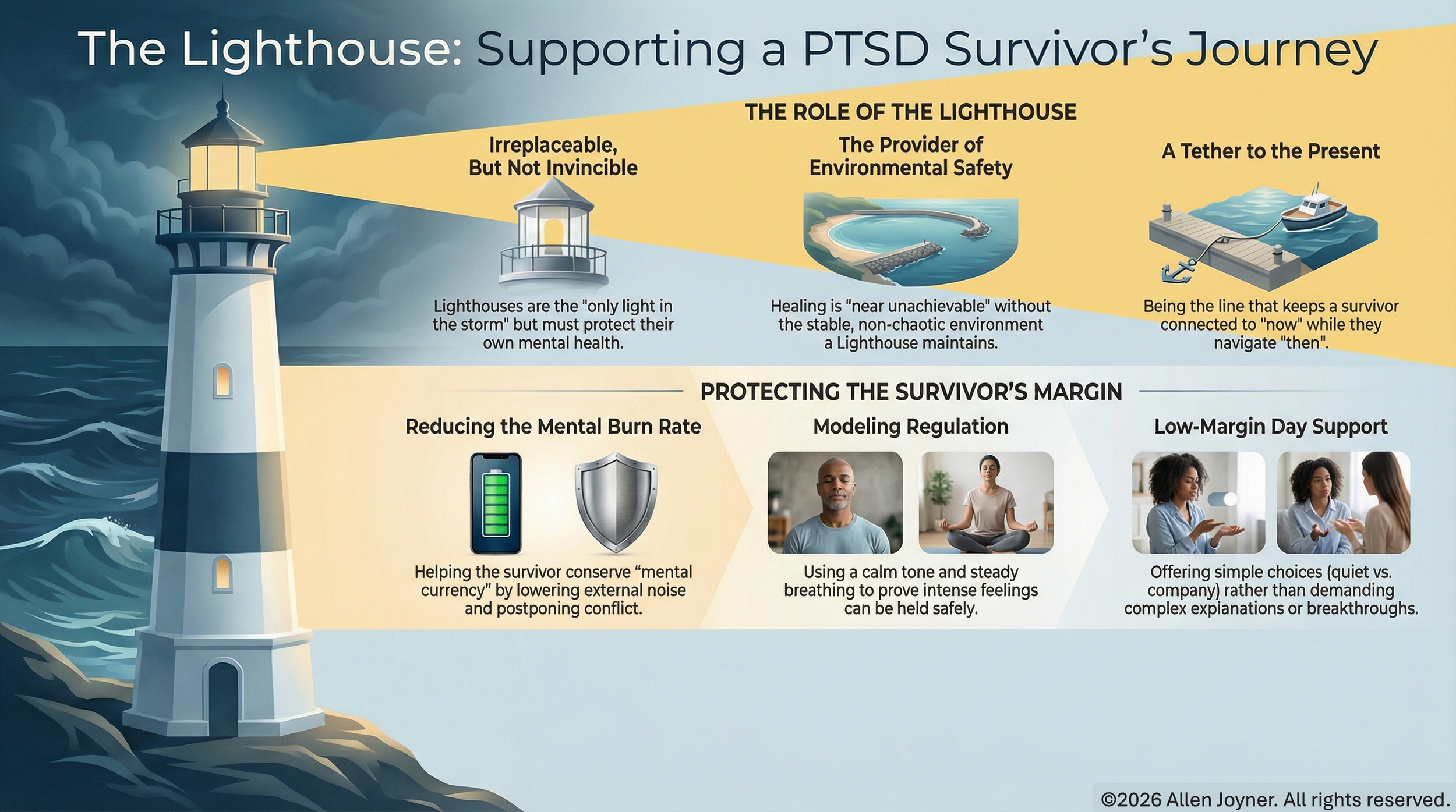
You are irreplaceable anchors who keep survivors tethered to the world when they are struggling. Your role should not be to "fix" the survivor, but rather be their anchor in now—not the memory of the trauma, the Imprint.
Your power lies in creating a steady, safe environment. By offering a calm, patient presence and listening without an agenda, a Lighthouse gives the survivor the environmental safety required to confront trauma on their own terms.
You also play a critical part in helping survivors build and protect their "margin" (mental and emotional bandwidth) by lowering external noise, avoiding unnecessary conflict, and not demanding explanations when the survivor is overwhelmed.
The Burden and the Need for Self-Care
You probably didn’t volunteer to be a Lighthouse. Yet your role can be the difference between growth and surrender.
You may be irreplaceable, but you’re not invincible.
Loving a trauma survivor can become a form of trauma in itself, as the Lighthouse lives in the unpredictable "aftershock" of the survivor's triggers and emotional shutdowns. In trying to manage the survivor's moods and anticipate their needs, you may have lost pieces of your own self and exhausted your emotional reserves.
Because of this immense toll, it is absolutely essential for you to establish boundaries, take time for self-care, and reconnect—to you.
You can’t pull someone out of the water if you’re drowning, too.